
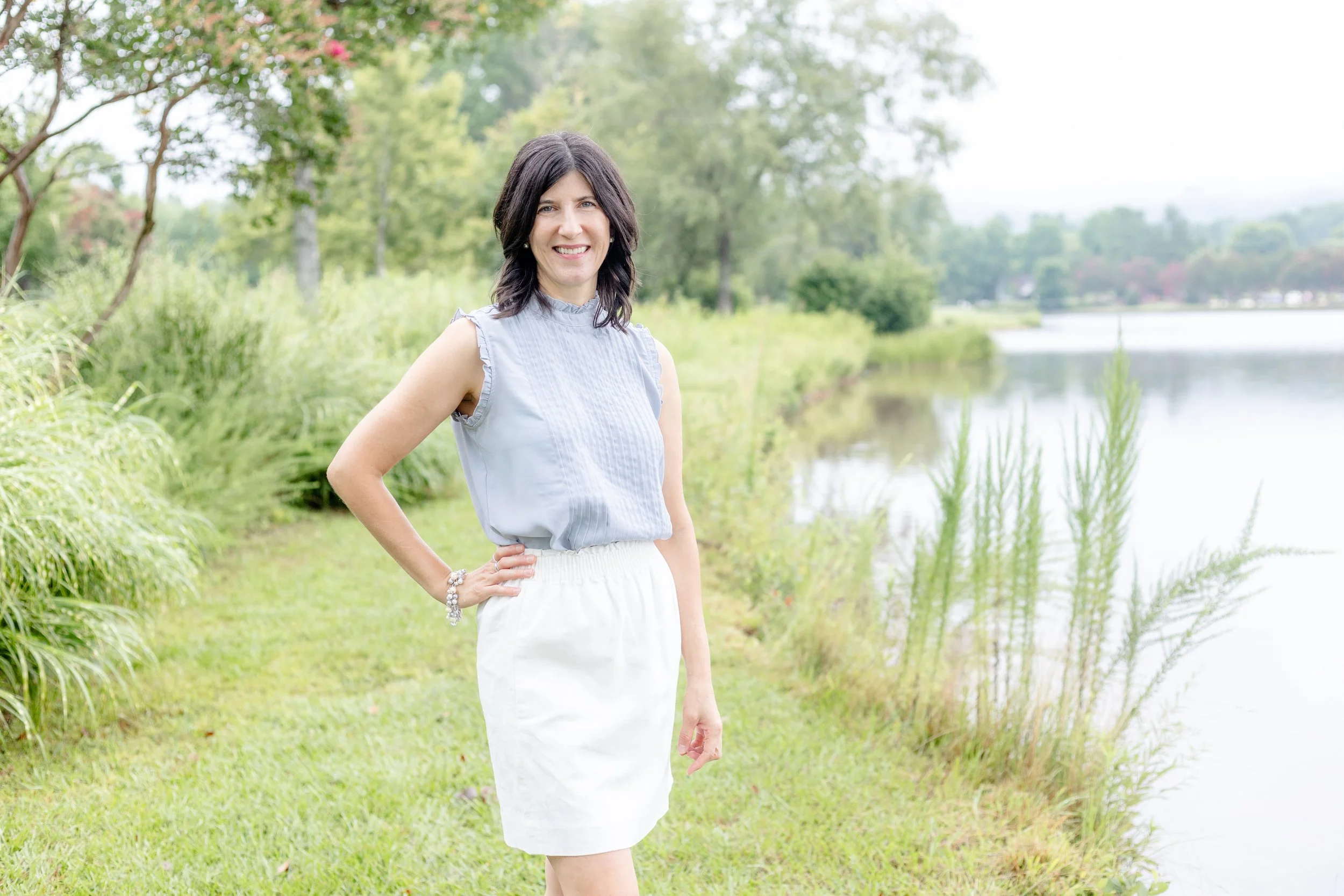
Hi, I’m Jennie Cushman! I truly enjoy working with children and adolescents of all ages, helping them feel seen and supported. In 2017, I earned an education specialist degree from Clemson University and served as a high school, middle level, and then elementary school counselor over the past nine years. Now a licensed professional counselor, I am currently completing the training, clinical experience, and supervision required to pursue the Registered Play Therapist™ credential.
My life experiences have made me deeply passionate about play and expressive arts therapies. I believe children naturally have the ability to grow and heal when they feel safe, understood, and accepted. My approach focuses on building a secure, trusting relationship while helping children express and work through their experiences in the time and way that feels right for them.
I also have much compassion for you as a parent or guardian. As mom of two grown children, I have experienced highs and lows: the moments of intense joy, irrepressible love…and the exhaustion and lying awake at night wondering if you are getting anything right. Parenting is not for the faint-hearted, and it is not meant to be done alone! I am here for you too.
Outside of the office, I enjoy being in my natural state as a bookish introvert! I cozy up at home with family, get lost in a good book, play around with arts and crafts, or catch up with a friend over a latte. I also love being outdoors and walking the trails around beautiful Greenville, South Carolina!
Licensure and Credentials
Licensed Professional Counselor (LPC) - License #12262
Certified K-12 School Counselor
Member of the South Carolina Association for Play Therapy
Education
Education Specialist (Ed.S.), Counselor Education
Master of Education, Secondary Education and Teaching